
winter break and summer camp · ages 8 and up
AI Coding & Machine Learning Camp for Kids in Frisco, TX
Train image and voice models, then put them to work in code.
- Teachable Machine
- Scratch
- micro:bit
In the camp
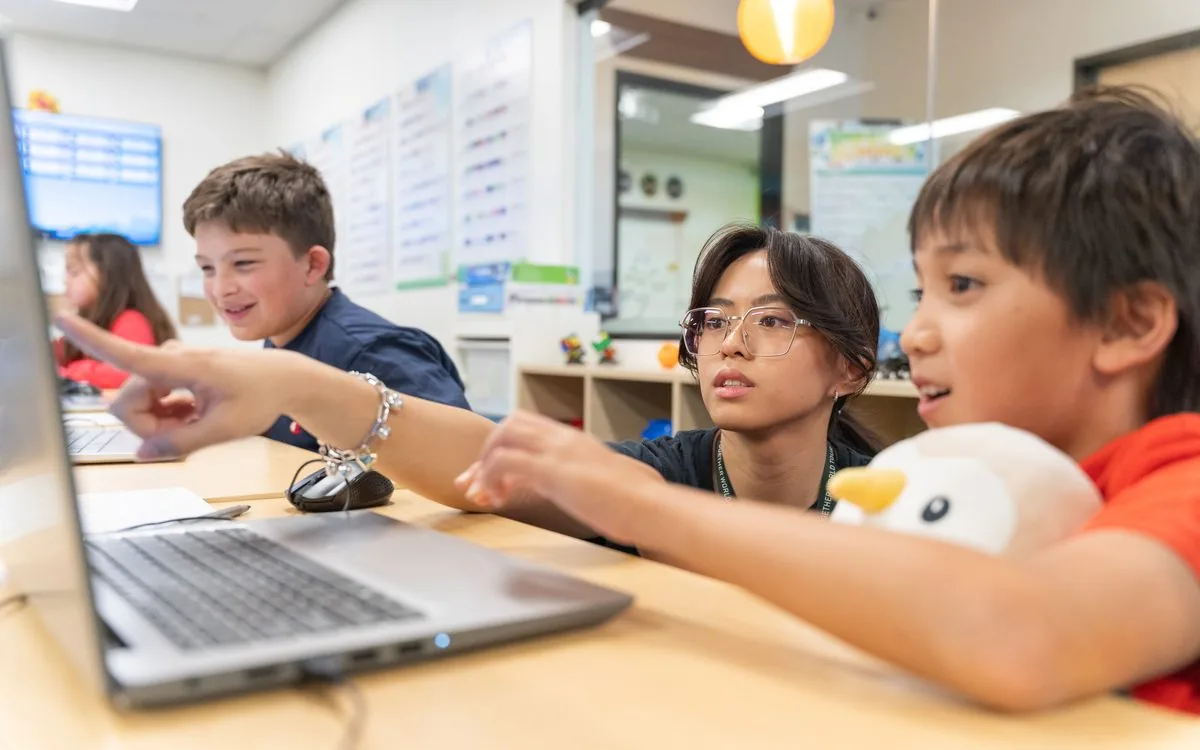
What they do
The projects they work through in the camp, one at a time.
A machine that recognizes their hands
Thumbs up, thumbs down, nothing. Webcam pictures in, a trained model out, and a reaction on screen - built in the first session.
Three more they design themselves
Happy and sad faces, rock-paper-scissors, a puppet that chirps. Same three steps, their own idea each time.
A fruit detector
Apple, banana, orange, held up to a camera. It is also the build where they find out what happens when the training data is sloppy.
A game driven by their face
A driving game controlled by poses rather than keys, with classes added for honking and for changing difficulty.
A Micropal
A micro:bit with servo motors, trained to recognize keywords and respond - a physical thing that reacts to them.
Their own Ninja AI in Scratch
The final project: they choose the input, the states and the output, and then hold a conversation with it.
The concepts behind it
What they are actually learning
The camp is the reason they turn up. These are the ideas they use to do it, shown the way they meet them, and they are the same ideas behind any programming language they pick up later.
The three steps
1 getting data2 training the model3 using the modelEvery machine they build in the week is these three steps. Say them often enough and a ninja starts diagnosing their own model.
Data and classes
class thumbs up : 40 imagesclass thumbs down : 40 imagesclass nothing : 40 imagesA model only knows the categories you gave it. The 'nothing' class is the one everybody forgets, and the reason their first machine sees a thumb in an empty room.
Overfitting and bad data
too few examples guessesall from one angle failstwo classes mixed confusedMore data is not automatically better data. They are shown a deliberately bad sample and asked why it would cause trouble.
Variables, on a real board
set exercise time to 0when class exercising detectedchange exercise time by 1The model's output drives code on a micro:bit, which is where machine learning stops being a demo and starts being a program.
What they leave with
By the end of camp
Taken from the camp's own curriculum, not written for this page.
- Learned about different types of AI tools, such as Google's Teachable Machine
- Explored a variety of ways to teach AI, including text, speech, and images
- Created interactive projects and games that respond to different input based on how the AI was trained
- Seen and discussed the power of AI along with the ethical use of AI in real life
When it runs
Next AI Coding & Machine Learning camps
Pick a date to book.
9am to 3pm, bring a lunch. Booking opens on MyStudio under Code Ninjas West Frisco.
After camp
Loved our camp? Keep building all year.
AI is the AI Academy, nine modules a ninja works through one class a week. The first session is free, so they can try it before you decide.
Before you ask
Common questions
Is this just playing with ChatGPT?
No. They train their own models from their own data - webcam images, poses, sounds - and then write the code that reacts to the result. ChatGPT comes up as an example of how a large model is trained, not as the tool.
Do they need to code already?
No. The machines are trained in Teachable Machine, which needs no code, and the code around them is blocks in Scratch and MakeCode.
Does it cover whether AI gets things wrong?
Yes, repeatedly and on purpose. Overfitting, bad data and “is AI always correct?” are their own slides, and the fruit detector is a reliable way to break a model in front of the person who trained it.
How does it relate to the AI Academy?
It is the same subject at camp pace, and the guide describes it as a good way into the Academy for a ninja who enjoys the week.
Also at this studio
 Ages 8+
 Ages 8+
 Ages 8+